Life skills and our guarantee
Academic and life
skills. Guaranteed.
We say guaranteed on purpose. It is a promise to a parent that their child will leave here able to do a specific, readable list of things — not merely familiar with them.

Kitchen lab. Every student cooks, serves, and cleans — the cleaning is not optional.
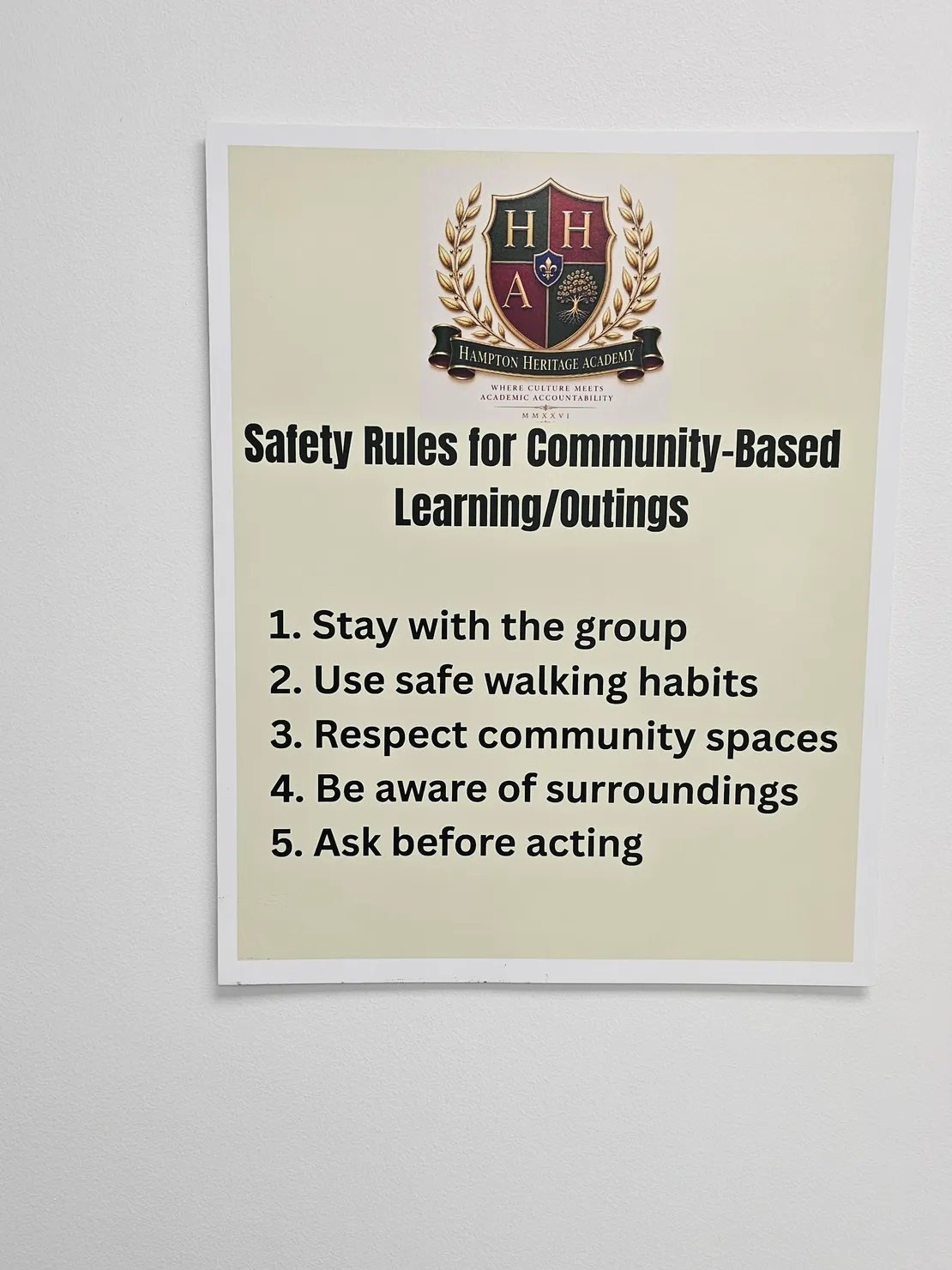
Our safety rules, on the wall by the door.
Community-based learning
Before a student walks out the door, they know the five rules.
A Learn It by Living It school goes into the business district around it. That freedom comes with a standard, and the standard is taught, practiced and posted.
- 01Stay with the group
- 02Use safe walking habits
- 03Respect community spaces
- 04Be aware of surroundings
- 05Ask before acting
Why a parent should believe the word
A guarantee is only worth the standard behind it. Ours is simple to state and hard to fake: a skill counts when a student can do it without us standing there.
- A list, not a slogan
- Every life skill we teach is written down, in plain words a parent can read, and grouped by strand — practical, financial, personal, civic, academic.
- Taught inside the school day
- Life skills are not an after-school club. They are scheduled, taught, and assessed alongside math and reading, in the same hours.
- Proven without help
- A skill is finished when a student can do it unassisted, in a setting that is not the one where they first learned it.
- Reviewed with academics
- Advisors look at the academic record and the life skills record together, because a child is one person, not two report cards.
The list
What a middle schooler
leaves here able to do.
Filter by strand to see the whole scope. Every row is taught during the school day and tied to a project, not a worksheet packet.
- 01
Cooks a real meal from scratch
Plans a simple menu, reads a recipe to the end, handles a knife and a stove safely, and leaves the kitchen cleaner than they found it.
How they practice it
Kitchen lab where each student cooks and serves a dish to classmates, then cleans up.
- 02
Keeps a working budget
Tracks what comes in and what goes out, tells a need from a want, and saves toward something they actually want.
How they practice it
A term-long personal budget a student keeps and reviews with their advisor.
- 03
Reads a paycheck
Understands gross pay, deductions and taxes well enough to explain where the money went.
How they practice it
A paycheck clinic using a sample stub and a calculator.
- 04
Speaks in front of a room
Stands up, makes eye contact, and presents work clearly to an audience of their peers and adults.
How they practice it
Quarterly showcase where every student presents a completed project.
- 05
Asks for help without apologizing for it
Knows how to name what they do not understand and go find the person who can help.
How they practice it
Advisory check-ins and a standing invitation to seek out the teacher who teaches that subject.
- 06
Writes an email and makes a phone call
Composes a short, clear message to an adult and can hold a real conversation on the phone.
How they practice it
Students arrange their own interview or supply request rather than having an adult do it for them.
- 07
Grows and tends food
Plants, measures, waters and harvests, and understands what a plant needs to live.
How they practice it
A raised garden bed the class is responsible for through the year.
- 08
Handles a disagreement without escalation
Puts the problem into words, listens to the other side, and looks for a solution that holds.
How they practice it
Restorative conversations practiced in advisory, not only after something goes wrong.
- 09
Builds and repairs with tools
Reads a plan, chooses the right tool, measures twice and finishes what they started.
How they practice it
A build project from drawing through assembly, kept and used in our learning environment.
- 10
Serves the neighborhood
Notices a real need close to home and organizes a small project that meets it.
How they practice it
A student-planned service project in Hollywood presented to the school at year’s end.
- 11
Manages their own week
Uses a planner, breaks a long assignment into steps, and meets a deadline they set themselves.
How they practice it
Weekly planning on Monday, reviewed with an advisor on Friday.
Ask us how we prove it.
Families often want to know what the assessment looks like in practice. We are glad to walk through it, with examples of student work.